Looking for the best high interest savings account in Canada? With so many
financial institutions and varying interest rates, it can be overwhelming to
find the right savings account for your needs. We break down the top options for
high interest savings accounts and help you make an informed decision.
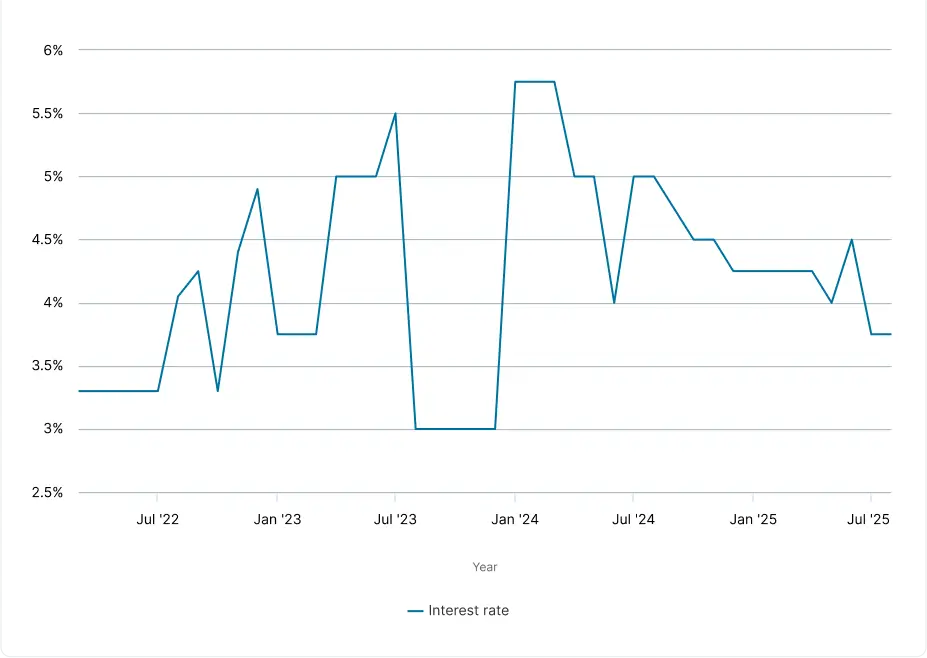
Canadian HISA rates comparison.
Our guide to high interest savings accounts
A high-interest savings account (or HISA, for short) is a savings account that
features a higher-than- average interest rate (usually around 1-1.7% range,
but certain banks may offer limited-time rates above 2% as part of a
promotion).
Why choose a high interest savings account?
Before we dive into the best HISA accounts, let's first understand why you
should consider one in the first place.
1. Higher interest rates
The main benefit of a high interest savings account is, of course, the higher
interest rates. These accounts typically offer higher rates than traditional
savings accounts, allowing you to earn more on your savings.
2. Easy access to funds
Unlike other investment options, HISAs offer easy access to your funds. This
means you can withdraw your money at any time without any penalties or fees.
3. Low risk
HISAs are considered low-risk investments, making them a safe option for those
who want to save without worrying about market fluctuations.
How does a high interest savings account work?
Similar to a normal savings account, a HISA serves as a place to deposit money
you don’t need access to all the time. While there, it accrues a high rate of
interest over time, increasing your balance organically the longer you
maintain the account. In short, it’s a great way to let your money grow while
you sleep.
That being said, while you’re free to withdraw your money from a HISA at any
time, they do come with a fair amount of regulations. Most notably, transfers
from your HISA account could take one or two days to complete, and you may
also have to pay a fee. Each institution is different, however, so make sure
you’re aware of their specific rules before deciding to open a HISA.
How do HISAs earn interest?
While the interest on a HISA is typically shown as a yearly percentage, it is
calculated daily and paid back into your account on a monthly basis, creating
what’s known as
compound interest (or interest on top of interest). If we were
discussing compound interest in the context of credit cards, that would spell
bad news, but those maintaining HISAs benefit greatly from it.
As an example, if you deposited $15,000 into your HISA with an interest rate
of 1%, you would receive $150 in interest if you leave your account untouched
for a whole year. That would bring your total balance to $15,150 without
lifting a finger.
An important thing to note, however, is that interest on a HISA can change
without warning, so always make sure to keep an eye on your current interest
rate and monitor any fluctuations.
Are HISAs good for long-term investment?
HISAs are an excellent way to dip your toes into the investment world with
very little risk, but also mean your rate of return is lower than what you can
earn with other investment vehicles. For longer-term saving goals (such as
retirement), you’ll most likely need to move your money into higher-yielding
investment options to accomplish them.
Do you pay taxes on HISAs?
HISAs are an excellent way to dip your toes into the investment world with
very little risk, but also mean your rate of return is lower than what you can
earn with other investment vehicles. For longer-term saving goals (such as
retirement), you’ll most likely need to move your money into higher-yielding
investment options to accomplish them.
How to choose the best high-interest savings account
When comparing high interest savings accounts, there are a number of factors
to consider. You can also consider extras, like whether the account offers
online and mobile banking, free Interac® e- Transfers, and bill payments. Some
high interest savings accounts also offer sign up incentives and promotional
interest rates. Even though these offers look attractive, you may find that
you’ll come out ahead by choosing an account with an everyday high interest
rate.
Here are a few more common things to consider when shopping around:
What are you saving up for?
One of the first things to ask yourself before opening a HISA is “what are my
financial goals?” Are they short-term, such as saving up for an exotic
vacation or a car? Perhaps they’re longer in scope, like putting money away
for a down payment on a home? Whatever the reason, choose a HISA that will
provide the flexibility you need while helping you meet your saving needs and
goals.
Minimum deposit
It’s common for some banks or credit unions to require a minimum deposit when
opening your account, but the specific amount can vary wildly, so make sure
you know the specific figure (or ask a customer service representative for
that information) before opening your HISA.
Interest rate
You wouldn’t be considering a high-interest savings account if you didn’t want
a great interest rate, so make sure this is one of the first things you look
at when comparing HISAs. Many financial institutions will feature ultra-high
promotional interest rates, and while these can be attractive, it’s important
to remember that they’re only temporary. Once the promotional period ends,
they’ll quite often drop, so you’d do better to compare standard interest
rates rather than promotional ones. That being said, if you think you can hit
your savings goal within that promotional time frame, a temporarily high
interest rate could be your best friend.
Fees and charges
While most HISAs don’t charge a monthly fee, some may still charge you for
withdrawals or transfers in certain circumstances. Make sure you’re aware of
your financial institution’s fees and policies before signing up.
How to open a high-interest savings account
To open a HISA, first make sure you meet the following criteria:
-
The age of majority in your home province or territory
- A Canadian resident with a permanent address
- In possession of a social insurance number (SIN)
If you meet these requirements, simply visit your financial institution online
and follow their navigation instructions to open a HISA. In most cases, what
you will need to provide is:
-
Personal information such as your full name, mailing address, and date of
birth
- Social insurance number
- Valid email address
If you would rather open a HISA in a brick-and-mortar bank branch, just make
sure your chosen bank or credit union operates physical locations and is not
online-only.
One important note: not every financial institution offers HISAs to residents
of every province (this is particularly true for credit unions). Always make
sure you’re eligible for a HISA before applying.
How does a high interest savings account differ from other types of accounts?
HISAs vs. chequing accounts
Unlike a chequing account, which is typically used for
day-to-day transactions like paying bills, savings accounts are meant as a
short-term investment vehicle to help grow your savings conservatively with
absolutely no risk. The cash you deposit in a savings account is “liquid”,
which means your money is always accessible and can be withdrawn at any time.
It’s why a savings account is an ideal place to set aside extra money for
large but predictable expenses (like a vacation or upcoming big-ticket
purchase), or an emergency fund while gathering interest.
HISAs vs. regular savings accounts
The decision on whether to keep your money in a HISA or a regular savings
account largely depends on your particular savings goals. Because HISAs have a
much higher interest rate than run-of-the-mill savings accounts, they tend to
be a better bet if you're saving for something significant (i.e. a car or
wedding). Plus, while HISAs are fairly liquid, they're primarily designed for
longer-term savings. This means you could encounter withdrawal limits, minimum
balance requirements, or transaction fees if you want to habitually take funds
out of the account.
Regular savings accounts, on the other hand, are perfect for keeping money
that you may not have any specific plan for but don't need in your chequing
account.
HISAs vs. GICs
While both HISAs and GICs are safe, protected places to store
your money, the most important differences between the two are liquidity and
interest.
GICs are "locked-in" investments, meaning that when you open one, you agree to
keep your money there, untouched, for a specific period of time (this can be
anywhere from a matter of months up to ten years). If you decide you want to
access your funds before that, you'll be subject to a penalty for withdrawal.
Because you've guaranteed the bank that your money will remain in the GIC for
the agreed- upon period, however, you'll likely earn higher interest. Plus,
the longer you agree to lock your money away, the higher your interest rate
will be.
HISAs, on the other hand, are far more flexible, allowing you to access your
money at any time, but tend to offer lower interest than that of GICs.
HISAs vs TFSA
While a high interest savings account (HISA) and a
tax free savings account (TFSA) seem similar, they are
typically used for very different purposes.
A HISA is a basic savings account with a competitive interest rate, designed
to help you grow your savings while keeping your money easily accessible. On
the other hand, a TFSA is a tax-advantaged account that allows you to invest
and save money without paying taxes on the interest, dividends, or capital
gains earned within the account. While HISAs offer liquidity and interest,
TFSA contributions have limits, and offer tax benefits, making
them a great choice for long-term investing and tax-efficient wealth growth.
Ultimately, the choice between these two types of accounts depends on your
financial goals and how you prioritize accessibility, returns, and tax
advantages.
HISAs vs RRSP
A high interest savings account and a
registered retirement savings plan (RRSP) are both accounts
where you can grow your savings over time.
An RRSP is a tax advantaged retirement savings account designed specifically
for long-term retirement planning. Contributions to an RRSP are
tax-deductible, reducing your taxable income for the year, while withdrawals
are taxed when you retire. RRSPs, unlike HISAs, have an annual
contribution limit.
Tips for maximizing your savings
While a high interest savings account is a great way to earn more on your
savings, there are a few tips you can follow to maximize your savings even
further.
Set up automatic savings plans
Many high interest savings accounts offer the option to set up automatic
savings plans, meaning you can set a specific amount to be transferred from
your chequing account to your savings account on a regular basis. This can
help you save without even thinking about it.
Take advantage of promotional rates
Some financial institutions may offer promotional rates for new customers.
Keep an eye out for these offers and take advantage of them to earn even more
on your savings. Be sure to evaluate the amount of interest you will earn
during the promotional period relative to other accounts.
Keep an eye on interest rates
Interest rates tend to vary, so it is crucial to monitor them and consider
transferring to another high interest savings account if a more favourable
rate is available.



 show more










 Ratehub.ca’s weekly newsletter